Lemurs
1) Lemurs normal habitat is Madagascar; this is an island in
the Indian Ocean that is about 250 miles to the west of South Africa.
Madagascar is mainly rainforest and in the rain forest it is usually humid and
has a lot of plants.
2) My trait is Sociality and Matting Patterns. The social patterns
of lemurs are usually they are found in groups from 11-17. With a few being
high ranked leaders. The reproduction process of lemurs tend to be based on the
environmental conditions.
3) The environmental factor of lemurs to mate only in
certain seasons is that they depend on the environment around them. They make
sure that they have shelter and enough food and water. This is may be viewed as
a adaption because they breed sometimes earlier in age or older.

4)
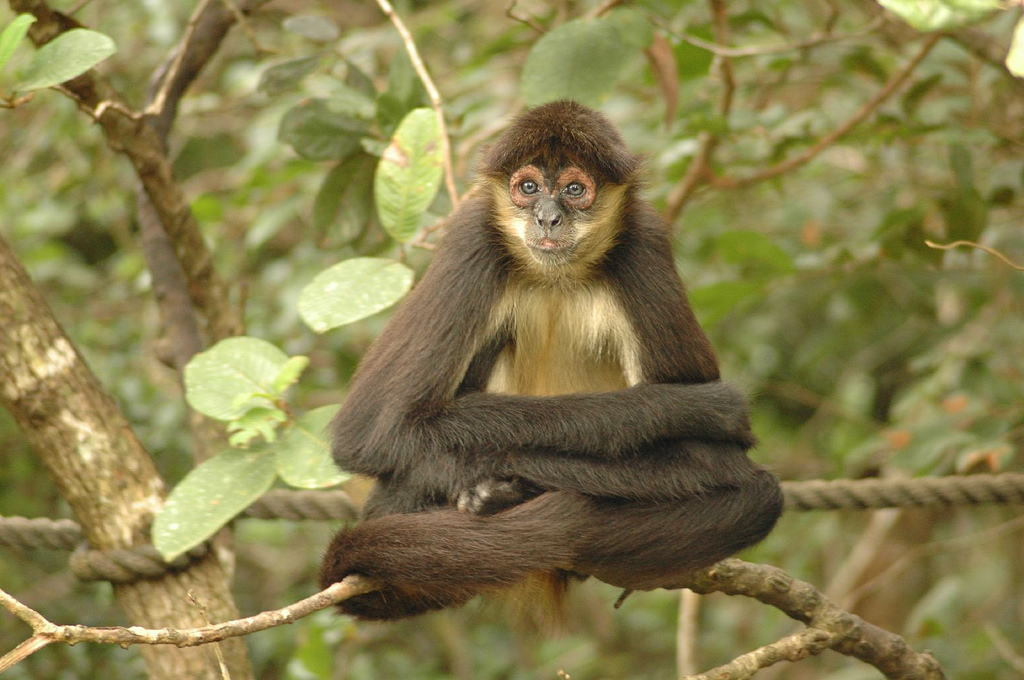
Spider Monkey
1) Spider Monkeys tend to reside in northern South
America. They are found in the rainforests where there is a lot of high trees,
here they can capture their food and stay hidden from predators. They are fast
from jumping tree to tree.
2)
The social system of spider monkeys lives in
fairly large size groups. The tend to feed together and gather fruit and other
food items together. During times of less food they spilt into smaller sub
groups. The mating of spider monkeys is high. They have a higher reproduction
rate than most monkeys and tend to have sexual receptivity lasting up to 10
days.
3)
A trait that can be viewed as an adaptation to
the primate’s environment is how they travel in large groups and stay high up
in trees. They are fast animals in high up trees because of their capability of
jumping. This keeps them away from predators.
44)
Baboons
1)Baboons typically live in Africa or Arabia they usually
live in savanna or other arid habitats, some however live in tropical forests.
2) Baboons social patterns consist of them traveling in very
large packs of usually 40 or more. They have usually 1 leader who is a female.
They breed throughout all seasons and usually there is more females in a group
then males.
3)A trait that can be viewed as an adaptation to the
primate’s environment is how they travel in such large packs. But when they go
out for food they have smaller gathering parties which they gather whatever
they can.

4)
Gibbon
1)
Gibbons usually live in old growth tropical rain
forests that tend to be in Southeast Asia.
2)
Gibbons social patterns consist of them being
very social animals who are very active during much of the say. They tend to
travel and live in small groups. There matting patterns are very interesting
they usually pick one mate and they stay with them for life.
3)
A trait that can be viewed as an adaptation to
the primate’s environment is how they travel in small groups and have only one
mating pattern this keeps them very close and watch each other’s back.

4)
Chimpanzee
1)
Chimpanzees tend to live in a very different variety
of places. Usually rain forests, woodlands, swamps, or grasslands that tend to
be in West Africa.
2) The social patterns of chimpanzees are very social animals that are very active during the day. They live in small very structured groups of about 50 members. They also have smaller sub groups of about 7 who stay loyal to each other. The matting patterns of these animals are that they breed year round.
3) A trait that can be viewed
as an adaptation to the primate’s environment is how they travel in large packs
this ensures safe shelter and more of them can gather food for the community.
Work Cited
http://pin.primate.wisc.edu/factsheets/

Good descriptions and connections for lemurs and spider monkeys.
ReplyDeleteFor the baboons, you say that they travel in large packs as a result of the environment, but you don't explain why this is so.
Good catch on the mating patterns for the gibbons. How does this help with "watching their backs"? Wouldn't it be easier to do that with larger numbers of individuals in the group?
Good job on the chimps. I understand how it might be easier to gather more food with larger numbers, but doesn't that mean they just need to gather more food? Why not have smaller groups and require fewer resources? What keeps their numbers so high?
Good images. Missing the summary?
You did a good job at providing the information. I did the same trait. You had some interesting facts that I didn't find like how the spider monkeys have one of the highest reproduction rates in all the monkeys. Also, when you mentioned that spider monkeys tend to have sexual receptivity lasting up to 10 days, it was an interesting fact.
ReplyDeleteBenjamin, I found your post to be informative and gave me insight into things I have not considered analyzing like the social patterns of primates. My post was regarding the dentition patterns of primates, which related to the dietary patterns of each primate. After examining each primate’s dental and dietary pattern it never occurred to me how they gathered their food and traveled but after reading your post I learned that most primates travel in packs for protection and as a social norm. Overall, really well done!
ReplyDelete